
DUBAI INVESTMENT ANALYSIS
One of the most tangible and high-performing investment sectors is real estate. Dubai’s property market, supported by strong attractions and a robust, diversified economy, creates an optimistic outlook and provides investors with confidence to generate substantial returns when capital is allocated through a well-structured and strategic property investment pipeline.
Even in Dubai, investments require careful study and analysis to avoid failure.
Sources from: dubailand.gov.ae
The graph shows 10-year price fluctuations influenced by force majeure events like COVID-19, with overall growth of around 40%. This means a typical buy-and-hold property as off plan buyers from developer achieved about 40% capital appreciation, excluding rental income, while property development partnerships can deliver over 100% returns within two years.

As indicated in the table below, the total residential supply is not expected to exceed 90,000 units. Even assuming a 75% delivery rate and an average occupancy of two residents per unit, this supply would accommodate only around 135,000 new residents. In contrast, Dubai’s ambitious growth vision suggests the need to house at least 450,000 additional people annually, highlighting a substantial gap between housing supply and projected demand.
Submarkets expected to lead in new supply between the remainder of 2025 and 2028 include Jumeirah Village Circle (27,082 units), Business Bay (19,472 units), Azizi Venice (17,108 units), DAMAC Lagoons (10,733 units), and Arjan (9,752 units).
As proof of the above statement, you can observe annual rental increases, with rents nearly doubling over the last four years.
Sales proportion by transaction value
As shown in the chart below, the highest demand for property purchases is in the AED 0.5 million to AED 5 million range, accounting for nearly 92% of total demand.
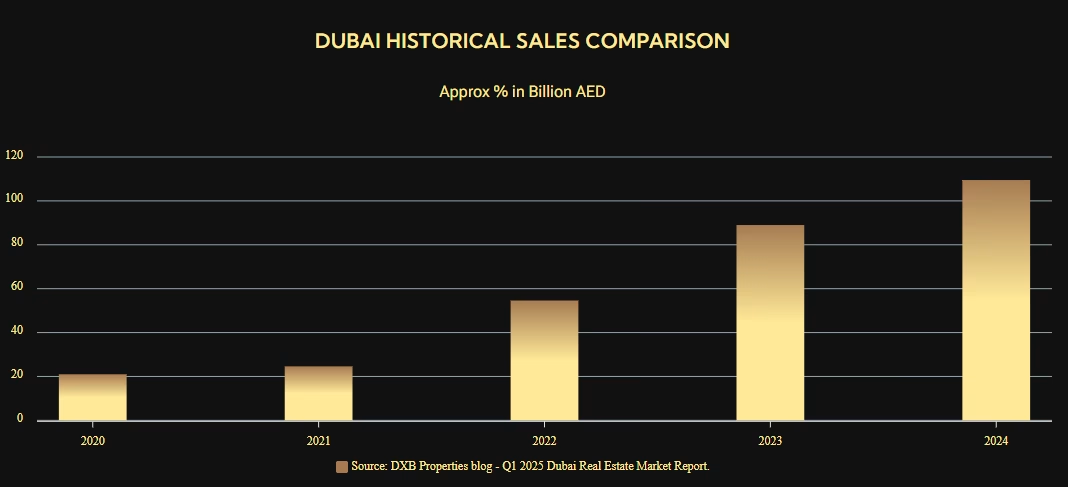
The graph below illustrates the rapid growth in dubai property transactions, showing data for the first half of 2025 only. Sales figures include both secondary (resale) properties and new off-plan units offered by developers.
Our platform offers off-plan, secondary, joint venture, and developer partnership opportunities, along with full property services.
Get in touch with us to get the best and secure suggestion for investment.
DUBAI INVESTMENT ANALYSIS
One of the most tangible and high-performing investment sectors is real estate. Dubai’s property market, supported by strong attractions and a robust, diversified economy, creates an optimistic outlook and provides investors with confidence to generate substantial returns when capital is allocated through a well-structured and strategic property investment pipeline.
Even in Dubai, investments require careful study and analysis to avoid failure.

Sources from: dubailand.gov.ae
The graph shows 10-year price fluctuations influenced by force majeure events like COVID-19, with overall growth of around 40%. This means a typical buy-and-hold property as off plan buyers from developer achieved about 40% capital appreciation, excluding rental income, while property development partnerships can deliver over 100% returns within two years.
As indicated in the table below, the total residential supply is not expected to exceed 90,000 units. Even assuming a 75% delivery rate and an average occupancy of two residents per unit, this supply would accommodate only around 135,000 new residents. In contrast, Dubai’s ambitious growth vision suggests the need to house at least 450,000 additional people annually, highlighting a substantial gap between housing supply and projected demand.
Submarkets expected to lead in new supply between the remainder of 2025 and 2028 include Jumeirah Village Circle (27,082 units), Business Bay (19,472 units), Azizi Venice (17,108 units), DAMAC Lagoons (10,733 units), and Arjan (9,752 units).
As proof of the above statement, you can observe annual rental increases, with rents nearly doubling over the last four years.
Sales proportion by transaction value
As shown in the chart below, the highest demand for property purchases is in the AED 0.5 million to AED 5 million range, accounting for nearly 92% of total demand.
The graph below illustrates the rapid growth in dubai property transactions, showing data for the first half of 2025 only. Sales figures include both secondary (resale) properties and new off-plan units offered by developers.


